


Associate Partner and Head of Industrial Disease, Ginny Newman, has secured a fantastic win for a client harmed at work – settling his case for £250,000. The client, Mr P, was working as a window fitter without supervision when he fell from his ladder. His right ankle shattered on impact with the ground, and his life changed instantly. Despite undergoing several operations since the accident, his mobility will never fully recover.
Mr P claimed that he did not have suitable equipment for the job, had not really been trained, and that his specific job that day had not been properly risk assessed. His employer, however, argued that the fault lay solely with Mr P. They alleged that he simply wasn’t doing his job properly and that the mistake was his, and his alone.
This case study will explain the accident itself, and how Ginny Newman represented the case so successfully.
How the accident happened
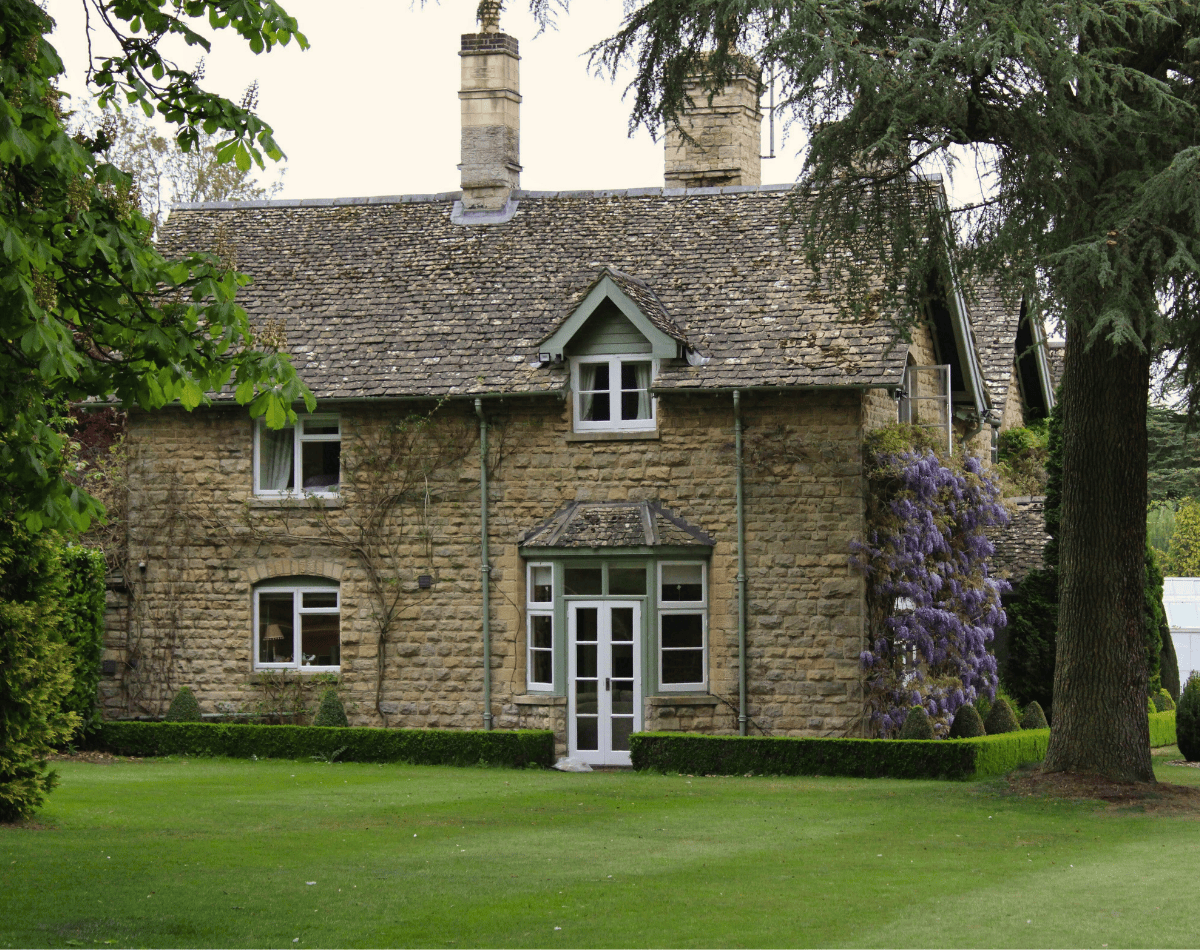
For 6 months, Mr P had been working for a window and conservatory fitting company based in Wales. On the 5th August 2021, he was working on site at a Victorian-era cottage that was being renovated, and having it’s dormer windows replaced. Mr P was in the attic of the property, trying to dislodge an old window from its wooden frame. Dormer windows are always taken out from the inside – but one particular window was stuck and wasn’t moving at all.
Mr P saw that it had been nailed to the side of the cladding around the window frame. He would not be able to remove the nail from the inside, so he went outside and got a ladder. He positioned it carefully in line with the window and over the concrete path at the front of the house.
Step by step, Mr P climbed up the ladder until his feet were some 7/8 feet off the ground. He started pulling the nail out, which seemed to be coming away easily from that angle. Suddenly, it popped free and came away altogether. Mr P lost his balance. The ladder stayed in place but he fell backwards towards the concrete path.
As he fell, Mr P’s fight or flight sense kicked in. His brain went into overdrive and time slowed down. The accident only lasted only a few seconds, but felt much longer. As he fell, Mr P knew not to land on his head. He tried to orient himself as best as he could in the air so that his “good” side would take the brunt of the impact. He crashed into the ground and his right ankle snapped violently. The rest of his body came clattering down hard on his right side.
The severity of the injuries
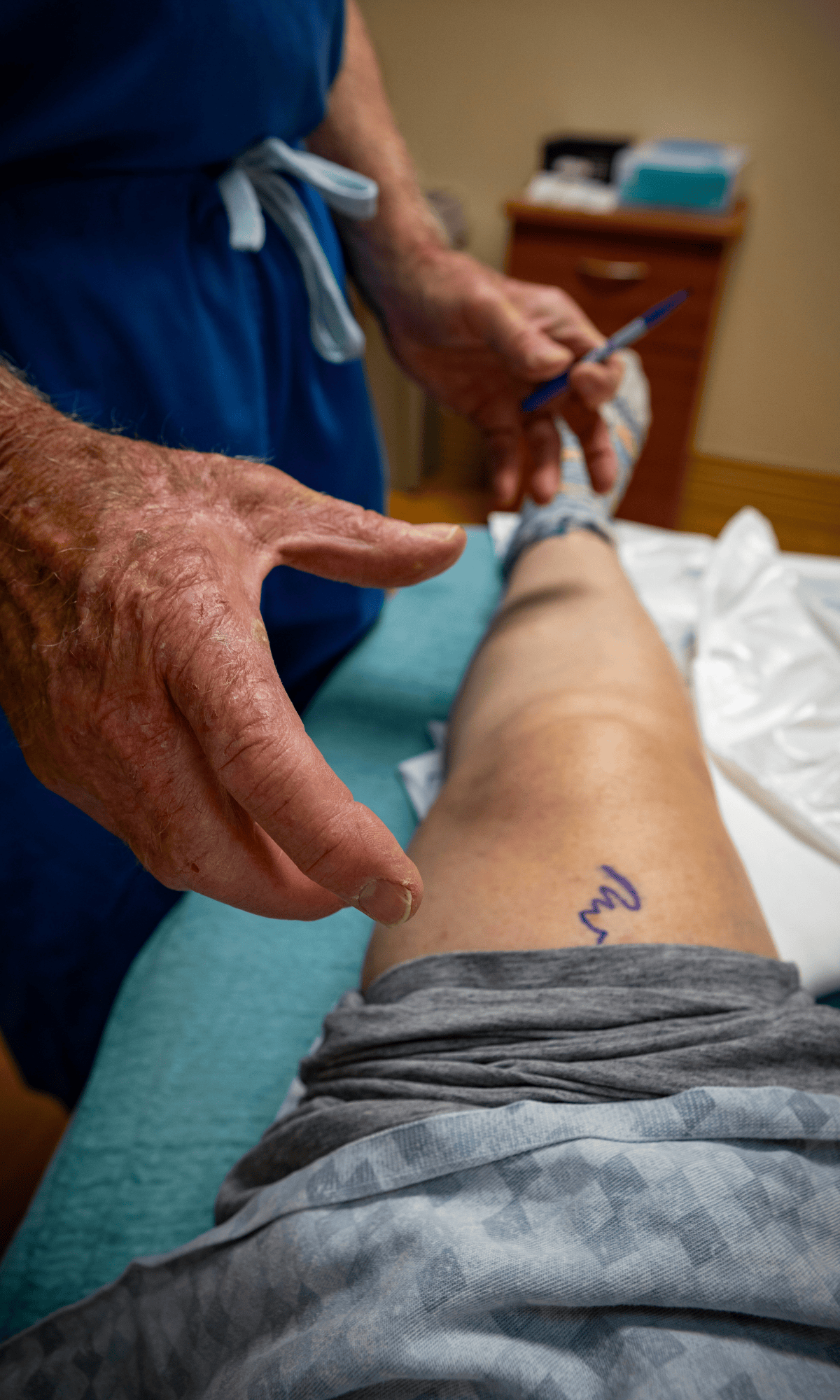
Mr P was taken to hospital where the physical damage was assessed. Obviously, he was distressed. His right ankle had suffered a severe fracture dislocation, and his right elbow had dislocated where he had landed on it. Metal work had to be surgically fitted to his leg to prevent further injury, and his right arm was bound in a cast. Mr P was told not to bear weight on his right side for the next 6 weeks – but full treatment would require multiple operations over several years.
The injuries were immediately life changing. At the time of the accident, Mr P was 27 years old. The medical experts he spoke with told him that he would experience severe limitations to professional, personal, and social activities for the rest of his life. Prior to the accident, Mr P regularly enjoyed leisure activities such as running and playing football. He would never experience either in the same way again.
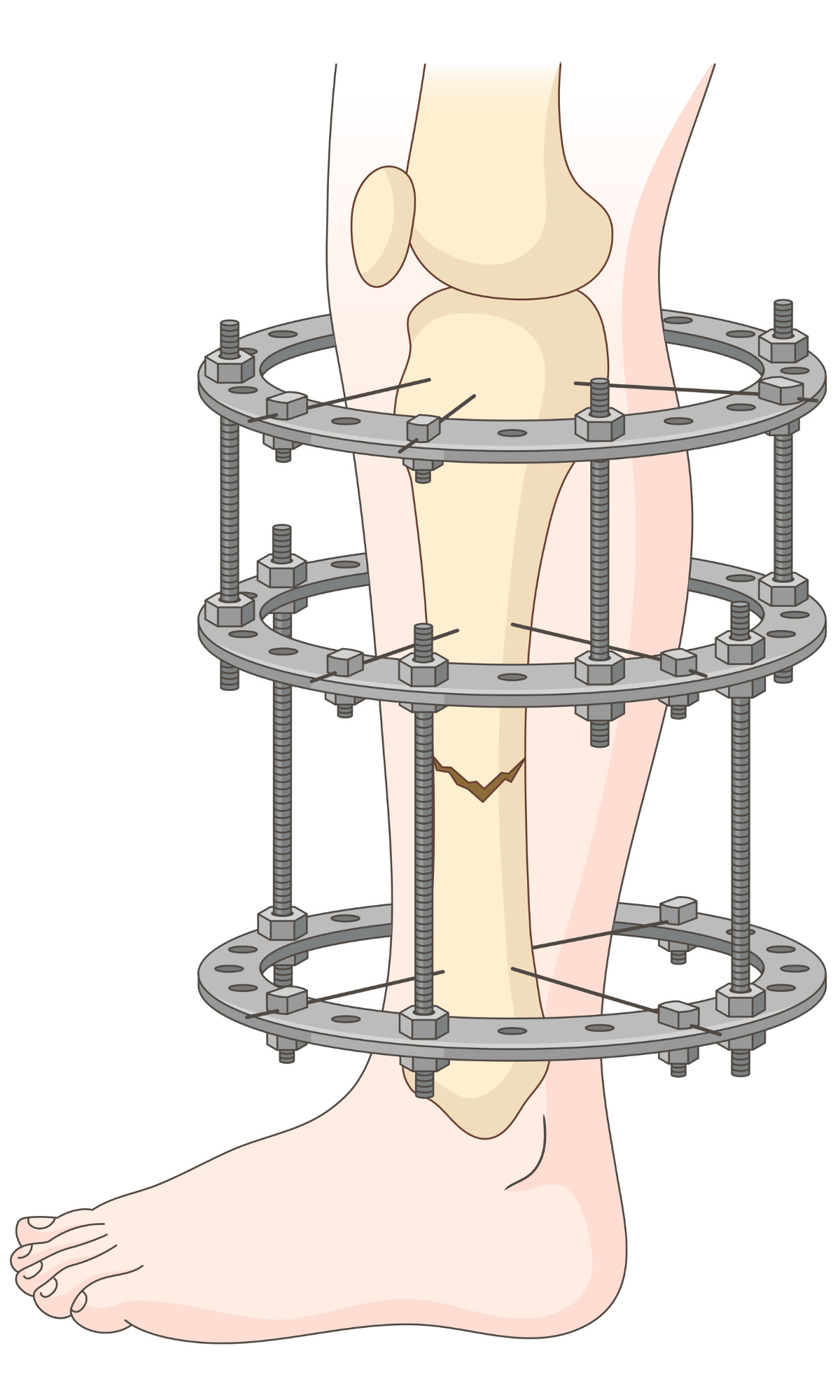
Eventually, his leg was fitted with an “Ilizarov apparatus” to support his recovery. This is a leg cage that uses large metal pins, fixed directly to bone through skin and muscle. Mr P’s wife had to clean the wounds around the apparatus daily.
The accident also took a psychological toll. Mr P began to experience regular nightmares. He developed a new and severe phobia of heights. Whilst recovering, with his wife assuming care responsibilities for him, he was less able to assist with caring for their two young children. This took a further toll on his psychological wellbeing.
To make matters worse, with Mr P out of work for a prolonged period – his employer made him redundant.
The Employers Liability claim
When we first spoke with Mr P, he was understandably frustrated with his situation. He believed that he had been wronged, and wanted to bring a claim against his former employer. After an initial consultation, we agreed to represent Mr P on a no win, no fee basis. Once the case was disputed, it was assigned to Ginny Newman, an experienced solicitor who is used to navigating the complexities of serious injury cases.
Ginny got to work, and began piecing together evidence. She spoke extensively to Mr P and his family. She obtained and reviewed his medical records. She consulted relevant workplace Health and Safety legislation. She even spoke with the owner of the Victorian cottage where the accident had taken place. Piece by piece, she constructed a full picture of the accident – how it happened, and how it could have been avoided.
Eventually, Ginny had built up enough evidence to recommend that a court claim was issued against Mr P’s former employer. This is the first formal step of the claims process, and involves notifying the defendant of the claim being made against them. The ball is then in the defendant’s court as to what happens next. In this case, the window and conservatory company had to either accept liability for the accident, or deny that it was their fault.
They went with the latter. In their written response to Pabla + Pabla on November 16th 2021, they stated; “we believe that the Claimant has been the author of his own misfortune in this instance”. Mr P was obviously disappointed, but Ginny assured him that the case could still be won. It was time to step things up a notch.

The leadup to the trial
Undeterred by an initial setback, and Mr P’s former employer blaming him for the accident, Ginny began the long process of taking the case to trial. During a trial, both sides present their arguments to the judge using evidence and witness statements. There is a fine art to preparing for a trial. Solicitors have to anticipate what arguments the opposing side will make, and then pre-emptively gather evidence that counters them.
Over the course of her career, Ginny has become very talented at this. In this specific instance, she felt the opposition’s arguments would centre on three points:
- Mr P’s injury wasn’t physically that bad.
- Mr P’s injury had not impeded his professional or personal life.
- Mr P had received suitable training for the job, which had also been properly risk-assessed.
As Mr P began to seek new employment, Ginny started to secure witness statements. Firstly, she consulted with multiple doctors who specialise in lower limb injuries. Using their expertise, she assembled a rock-solid picture of how severe his injuries were – with doctors testifying that he had sustained arguably the worst possible kind of ankle fracture.
Secondly, Ginny put together witness statements explaining how life-changing his injuries were – to counter the idea that his life had not been impeded. She got statements from him and his family describing how he could not run, play football, or play with his children in the way he used to.

Ginny also anticipated that Mr P’s return to work would be leveraged against him. They would likely argue that his injuries must be mild if he was working again. This, however, was far from the case. Much of Mr P’s work had previously been physical – a type of work that he now struggled to do. After being made redundant, he first found a job loading and unloading carcasses at an abattoir – but couldn’t load bear on his injured leg. He next found a job working as an Amazon delivery driver – but struggled massively with the final stages of deliveries where he would have to walk. He next found a job working with sheep in the nearby countryside, but couldn’t meet the physical demands of that job either.
Ginny’s statements from Mr P’s family described how “ashen” he looked as he returned home from a string of jobs he now found himself unable to do. After some convincing, Ginny convinced Mr P to speak with a psychiatrist. They assessed him, and concluded that he was displaying clear symptoms of PTSD and an adjustment disorder – characterised by depression-like symptoms that usually follow a very sudden change in a person’s routine or lifestyle.
How Ginny finally won the case
Ahead of the trial, both sides agreed to attend a “Joint Settlement Meeting”. This is a formalised, confidential discussion where both parties try to reach a compromise and “settle” the case without going to trial.
The opposition, and Mr P’s former employer, accepted. Ginny and Mr P were delighted. Even the simple act of them accepting the meeting meant that they saw some merit to the evidence Ginny had gathered, and accepted at least some liability for the accident. They were worried about going to trial – which was great news for Mr P.

On October 2nd 2025, Ginny sat down with Mr P and his wife in room they had hired for the meeting. Mr P’s former employer and his solicitors dialled in over zoom, and negotiations began. Joint Settlement Meetings follow a very rigid structure. Evidence is discussed, points of liability are argued over, and offers and counteroffers are made.
Again, there is a fine art of Joint Settlement Meetings. They require a skillset in negotiation that takes years to develop. After some tough hammering out of the finer details, both sides agreed to a settlement figure of £250,000 being paid to Mr P.
What happened afterwards?
In the four years since his accident, Mr P has undergone years of stress. Despite this, no matter how challenging his circumstances have gotten, he has consistently tried to move forwards. Not just for his sake – but for the sake of his family. He has tried again and again to find work that can support them. He has undergone three significant surgeries. He has successfully navigated a complex and emotionally taxing claims process. He has demonstrated his personal resilience in ways that few people ever have to. He has been nothing short of brilliant.
Mr P has now found stable employment at a manufacturing company close to his home in Wales. He and his wife have welcomed a third child into their family, which they are immensely happy with. With the money he won in his settlement, Mr P plans to buy a house where he and his wife can raise their three happy children.
This case took years to settle. In that time, Ginny grew quite close to Mr P and got to know him and his family well. She said that the drive home from the settlement meeting was euphoric, and she was incredibly happy to have achieved such a good result for Mr P. It’s a good feeling – but not one she has time to process. Ginny’s work is ongoing. She always has other cases to focus on, and other battles to fight.
“I’m really happy with the outcome of the case, and would like to extend special thanks to Ginny Newman. This result has made the past four years of hell that I have been through a bit more worthwhile. Myself and my family plan on using the money to buy a house, which would simply not have been possible without Ginny.”
– Mr P